Spokesperson and scientific lead
Prof. Dr. Melanie Keller
Physics Education
see profile
+49-(0)431-880-4058


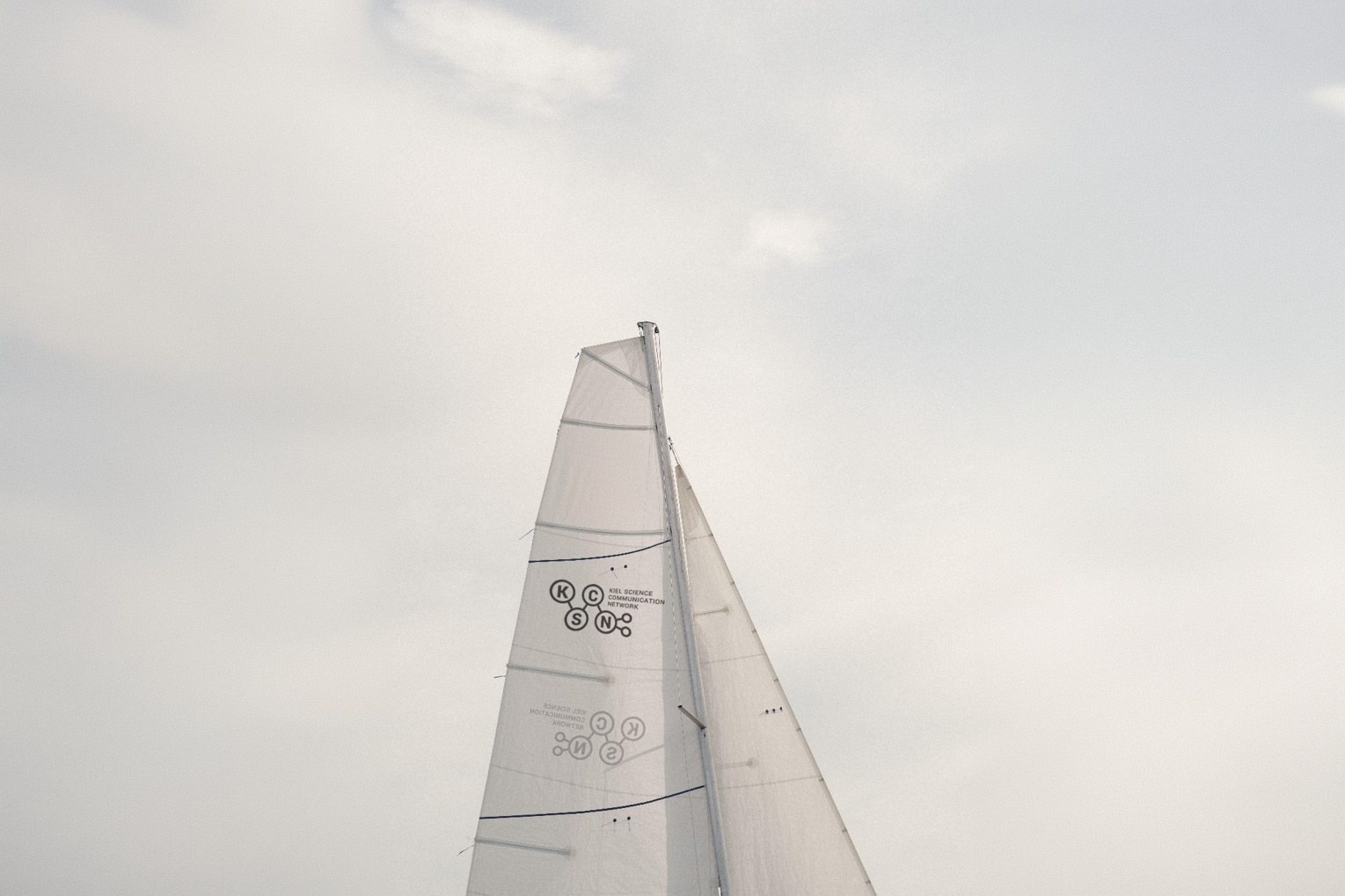
The Kiel Science Communication Network (KielSCN) has undergone a successful evaluation and been awarded three-years of follow-up funding, to run until November 2029, in the “Science Communication Cubed” program. The decision was taken by the Supervisory Board of the funder, the Volkswagen Foundation, at its June meeting. Now the Network’s structures are set up and the team has conducted research into the mechanisms of scicom and its impact, the project’s second phase will seek to establish institutional frameworks for the sharing of knowledge to forge a long-term connection between research and evidence-based science communication.
One of four centers in Germany conducting research into scicom, KielSCN has received Volkswagen Foundation funding since December 2021. The overarching objective during the first phase of funding was to draw on insights from research for improving visual science communication. One key focus was on identifying central mechanisms for the impact of science communication, particularly on health-related topics. The research agenda for the second phase will build on the findings of the first to explore emotional processes and the dynamics of trust.
A further focal area for the project is the sharing of knowledge across disciplines between research into science communication and those who work in the field. The team’s findings thus far have shown that processes in this area currently relate largely to specific projects and are yet to be appropriately established in institutional structures. During its second funding phase, KielSCN will build on these insights; Dr. Carolin Enzingmüller and Dr. Willi Scholz will head up the team as it attempts to set up long-term structures for sharing and transferring knowledge. One of its methods will be the development and testing of what are termed “broker profiles,” specific roles that act as points of contact and interaction between KielSCN’s research on science communication and actors in the field. Designed on the basis of the first phase’s experiences and findings, they will focus on the three areas of visual design, embedded evaluation formats for practical scicom work, and professional development and training.
As in the first phase of funding, the IPN in Kiel will coordinate the work during the second phase. Two professorships based at the IPN and centering on science communication will provide continuity beyond the conclusion of funding. From December 2026, these professors will lead on research at KielSCN. Kiel University (CAU), a co-applicant for the funding, is investing specifically in staffing for the long term, with the purpose of establishing science communication as a strategic area of action in the science context and thus embedding the brokers’ activities, results and profiles institutionally in scaling processes with actors in Kiel and beyond. Networks and intermediary organizations will extend the institutional reach of the activities. Established partner organizations that began to work with KielSCN in 2021 are the Muthesius University of Fine Arts and Design, Open Campus, and the popular science monthly Spektrum der Wissenschaft. Organizations joining us for the second stage are Wissenschaft im Dialog, the German research and science organizations’ initiative for scicom, and the Leibniz Research Network “Evidence-based Science Communication.”
The Kiel Science Communication Network (KielSCN) is engaged in developing novel approaches to communicating the findings of science and research. Its work centers on visual representations of information and how people perceive them. The team considers what makes for high-quality visual content in science communication and how to create it; how various different target groups perceive these visuals; and how scicom professionals can use elements of design to achieve their objectives. Further, KielSCN, working on an interdisciplinary basis across a number of research projects, explores what researchers, students and young people need if they are to communicate effectively on scientific findings using visual and other means.
Alongside the planned research on trust, emotions, and visual science communication, the second phase of the project will focus on the systematic sharing of knowledge between researchers and practitioners. The team will be aiming to establish permanency for structures that can transfer scientific findings impactfully to real-world contexts and feed practitioners’ experiences back into research work.
The Volkswagen Foundation has been supporting KielSCN, alongside three further research consortia in Germany, since 2021 in its “Science Communication Cubed” funding program. The project’s second phase will fund KielSCN’s work until 2029.