Daniel Sommerhoff
Mathematics Education
see profile
+49-(0)431-880-5299


January 16, 2026
The IPN’s Prof. Dr. Daniel Sommerhoff has received a lifetime professorship in mathematics education, a joint appointment by Kiel University (CAU) and the Leibniz Institute for Science and Mathematics Education (IPN), effective January 1, 2026.
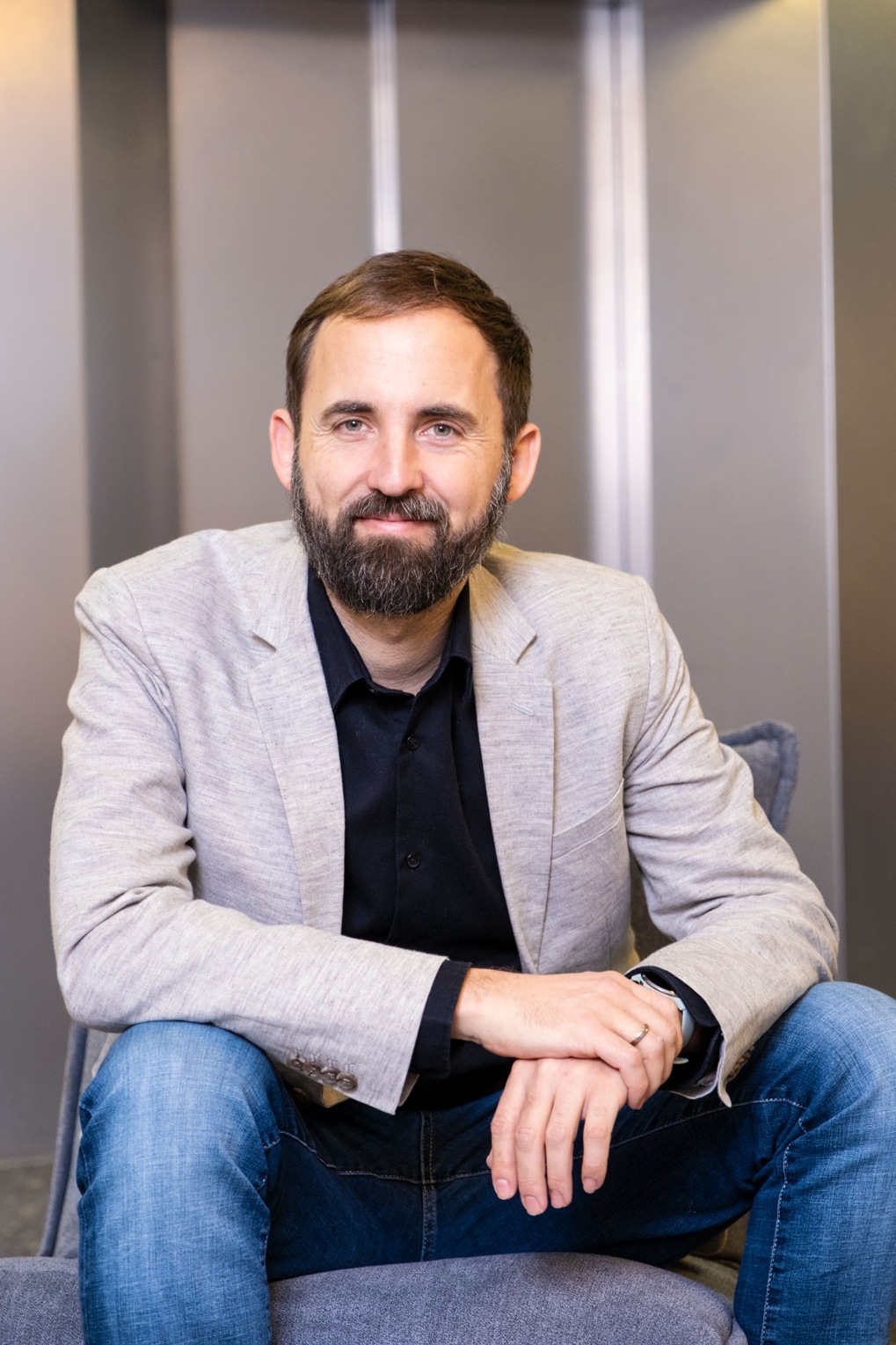
Daniel Sommerhoff was appointed to a tenure-track junior professorship in Kiel in August 2021. Having met ahead of time all the targets agreed at his initial appointment, Daniel was able to go forward for a permanent professorship earlier than scheduled and has now passed his evaluation with flying colors.
Daniel has achieved a robust research track record in mathematics education. His career commenced at Ludwig-Maximilians-Universität München (LMU Munich), where he studied the teaching of mathematics and physics for academic-track secondary schools alongside a separate degree program in mathematics. There followed doctoral study in the field of learning sciences. He first joined the IPN as a postdoc in 2020 and attained the junior professorship in the subsequent year, simultaneously becoming vice-director of the IPN’s Department of Mathematics Education.
His principal research interests at the IPN center around the research line on “Professional Competence and Learning of Teachers”, specifically around the use of simulation-based learning environments for purposes such as supporting teachers to develop their skills in assessing student learning and diagnosing problems.
Daniel Sommerhoff’s permanent professorship heralds a boost to continuity in the Department of Mathematics Education, enabling it to plan its research in this area for the long term. We caught up with Daniel to ask him a couple of questions about this exciting new chapter in his career.
You’ve said how one of your children responded to the news about your lifetime appointment by asking “Does this mean you have to work for ever now?” We’re wondering what changes you expect becoming permanent to bring for you?
I’ve never really noticed a great divide between W1 and W2 [junior and mid-level] professors at the IPN, neither in research nor in the context of the Institute’s leadership team. So I’m not really expecting a great deal to change, in terms of how things work day to day. And of course I won’t have to work “for ever,” but I now know my work at and with the IPN will be a long-term matter.
Will anything change about your research in the next few years – any new or intensified areas of interest?
In recent years, alongside my research on teachers’ professional competencies, I’ve been focusing more closely on skills acquisition and learning processes. We don’t know anywhere near enough about these things – and what we do know comes from qualitative work. I think there’s a lot of catching up to do there.
You’re originally from Bavaria. What’s it like for you to live and work in northern Germany?
People ask me this a lot! I have to say that I’m very happy here up north. But even after four years, I’m still not quite used to still saying “Moin” [north German greeting that may derive in part from Morgen, the German word for “morning”] after 10 at night, calling Krapfen [filled doughnuts] Berliner, and people going for a dip in the Baltic even when it’s below zero outside.