
Current issues in the development of schools and teaching: Report on the seventeenth Summer University for teachers at the Sankelmark Academy
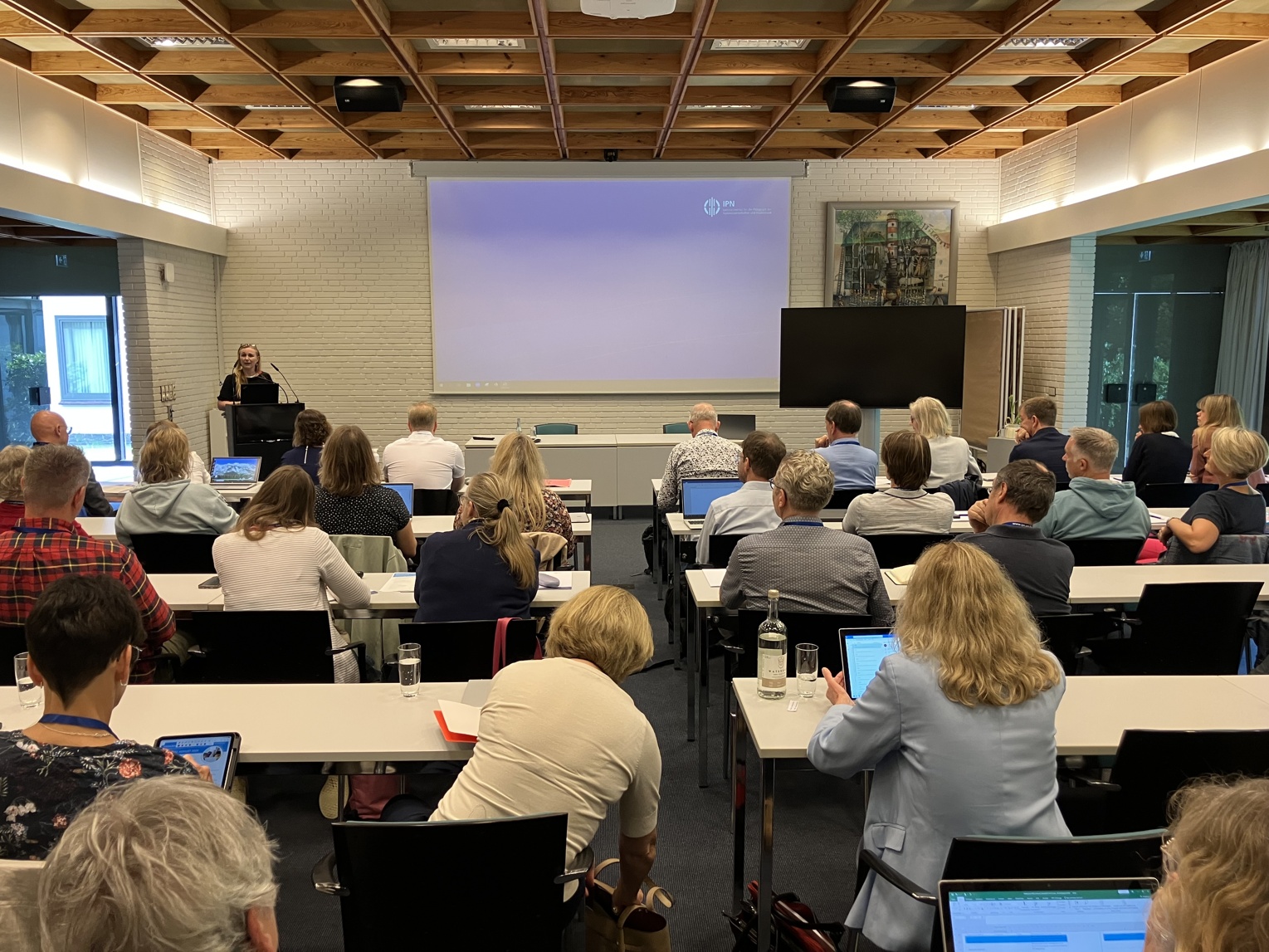
The seventeenth edition of Schleswig-Holstein’s Summer University for teachers and school leaders took place this year from July 31 to August 2 at the Sankelmark Academy. The central topics explored by the participants were the data-assisted development of schools and teaching, the digitalization of day-to-day life in schools, and psychosocial characteristics of learners in schools. Welcoming attendees to the event, Dr. Desiree Burba from Schlwesig-Holstein’s Ministry of General Education and Vocational Training, Science, Research and Culture (MBWFK) outlined the significance of supporting attainment and skills, equality of opportunity, and wellbeing and personality development as the overarching objectives of school-based education. Following her, Susanne Danke from Hamburg’s supervisory authority for schools gave a presentation on how Hamburg is working with agreements on targets and goals for schools and school data sheets. This talk, alongside those given later on by Silke Rohwer from Schleswig-Holstein’s supervisory authority and Dr. Thomas Wehr from the MBWFK, demonstrated aptly that Germany’s various federal states can learn a lot from one another and that school data sheets can provide solid foundations for discussions around targets and objectives. A particularly impressive contribution in this context came from Tobias Langer, head of the Elisabeth Lange School in the Hamburg district of Harburg, who described how he and his team had succeeded, in the space of seven years, in implementing up-to-date, optimized processes in an undersubscribed school with a disadvantaged catchment, whose students had been performing poorly. A panel discussion took place that afternoon, facilitated by Prof. Dr. Jens Möller of Kiel University and featuring Dr. Burba, Susanne Danke, Tobias Langer, Prof. Dr. Olaf Köller (IPN), and Dr. Gesa Ramm from the IQSH, an institution focusing on quality development in Schleswig-Holstein’s schools. The participants explored the current state of affairs and aims for the future with regard to the objectives of supporting attainment and skills, equality of opportunity, and wellbeing and personality development, and considered how to promote each of them.
Concluding the Summer University’s opening day, Prof. Dr. John Hattie, the renowned Melbourne-based educationalist, gave an online lecture, which included details of his most recent findings on the significance of school and classroom climate to student attainment. During his talk, it became evident that his observations on the topic now go substantially beyond the bivariate relationships set out in his seminal Visible Learning. In an energetic and engaging presentation, Prof. Hattie outlined the role of direct instruction progressing to opportunities for learners to apply their new knowledge in a more self-regulated manner. Those interested can watch a recording of Prof. Hattie’s lecture on the IPN’s YouTube channel.
On the morning of the event’s second day, Prof. Dr. Birgit Eickelmann of Paderborn University detailed the latest findings from ICILS (the International Computer and Information Literacy Study), which identified a further decline in digital literacy skills in Germany between 2018 and 2023, alongside a sizeable group of school students at risk of digital illiteracy, whose skills in this area are insufficient for the challenges of today’s world and have fallen behind those seen in other nations such as the Czech Republic. The next talk was by the IPN’s own Prof. Dr. Olaf Köller, who spoke on the opportunities and challenges associated with the use of large language models such as ChatGPT to mark written exams. He noted that LLMs are now capable of agreeing, to a satisfactory level, with the assessments made by teachers, provided they are prompted appropriately.
The attendees were impressed by the commitment of Martin Spiewak from the German weekly national broadsheet Die Zeit and Dr. Gaby Knoop, a specialist advisor from the IQSH, who gave a presentation on the Germany-wide project Journalismus macht Schule – Umgang mit Fake News im Kontext der Digitalisierung, which seeks to educate school students on the dangers of fake news in social media and on how quality media ensure the accuracy of their reporting, giving them opportunities to discuss these issues with journalists in their schools. The audience had lots of questions to ask about working on Die Zeit and were fascinated by the answers.
Dr. Lea Marie Nobbe of Goethe University Frankfurt am Main kicked off day three of the Summer University with an entertaining presentation on self-regulation in learning. Alongside emphasizing the importance of cognitive, metacognitive, motivational, and emotional self-regulation to learning at school, she outlined the diverse range of factors that need to be in place for self-regulated learning to succeed. The lecture that followed, by Prof. Dr. Ricarda Steinmayr of TU Dortmund University, centered on a related theme, school students’ subjective wellbeing. Prof. Steinmayr reported that young people have yet to recover completely from the severe impact on their wellbeing sustained during the Covid pandemic, noting that school students experience significant stress due to the current crises in the world, including wars and climate change. Prof. Steinmayr’s talk revolved around the MindOut program for promoting subjective wellbeing, which has undergone a thorough empirical evaluation in Ireland and which Prof. Steinmayr is currently evaluating in the German context. Her talk detailed specific exercises from the program to give an impression of the overall training it provides. Maren Lorenzen from the IQSH’s center for preventive interventions (ZfP) rounded off the session by setting out the structures of the ZfP’s work in Schleswig-Holstein.
During the discussion that followed, participants put forward initial suggestions for topics the Summer University might focus on next year and expressed high levels of satisfaction with the event in general and with specific issues discussed. We would like to thank all this year’s speakers for another fascinating, varied and productive Summer University, at which all available places were taken, and the attendees for their lively contributions to the discussion.
Contact
Jens Möller
Institute for Educational-Psychological Teaching and Learning Research, University of Kiel
Olshausenstraße 75, Building I, Room 408a
Phone: +49 431 880-1241
jmoeller@ipl.uni-kiel.de