
A year’s voluntary work in science, technology, and sustainability: Volunteers’ visit to the IPN
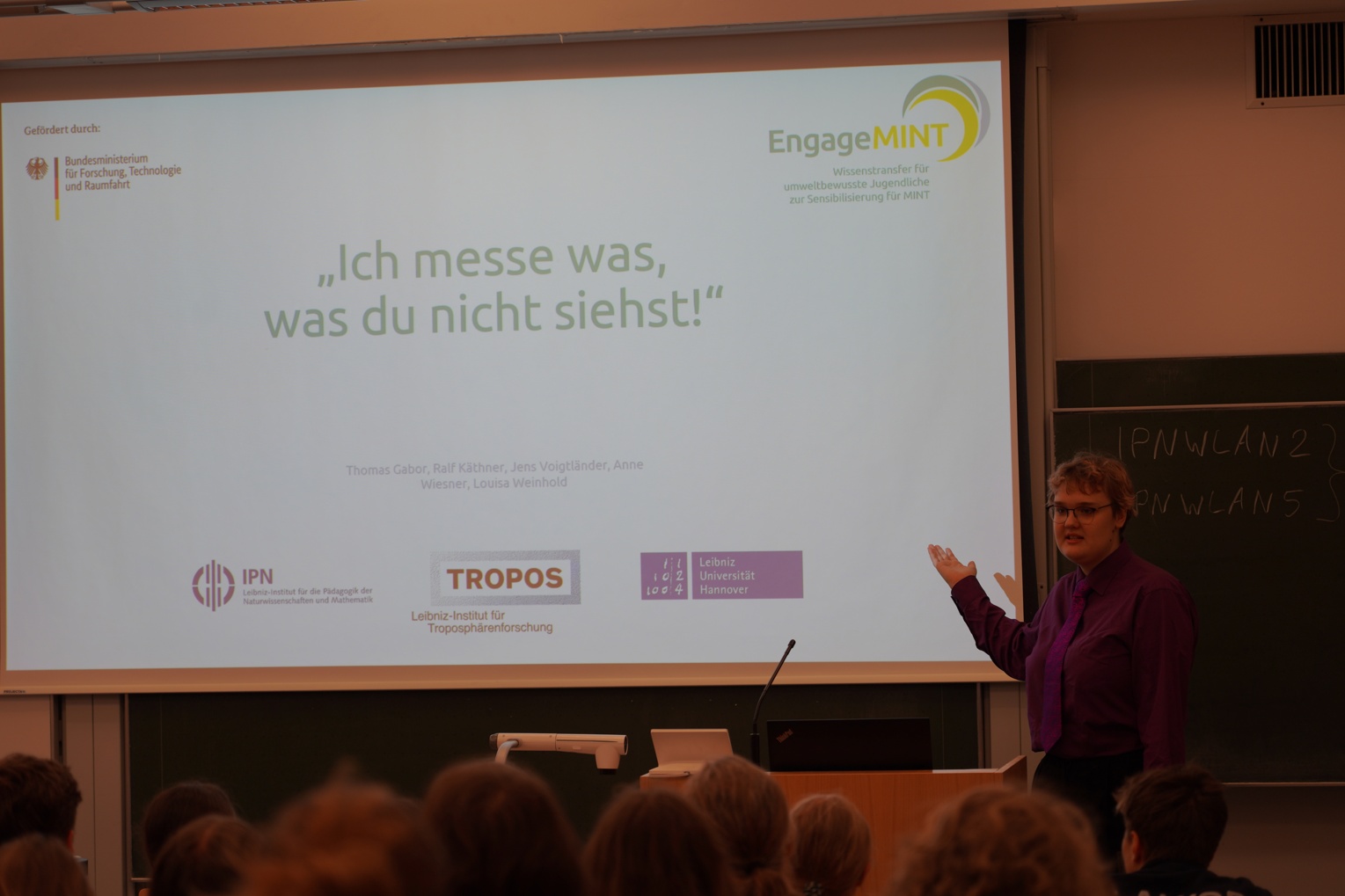
On July 31, 2025, the IPN welcomed 60 young people completing a year of voluntary work in the areas of science, technology, and sustainability. The Department of Biology Education had invited them for a visit to see the IPN at work and find out about the EngageMINT project, funded by the German Federal Ministry of Research, Technology and Space (BMFTR).
The Voluntary Year in Science, Technology and Sustainability (Freiwilliges Soziales Jahr in Wissenschaft, Technik und Nachhaltigkeit, FJN) helps young people – particularly school-leavers – to work out whether they would like to pursue a career in STEM, especially in scientific research. The FJN is a specific form of the Freiwilliges Soziales Jahr (FSJ), a more general volunteering scheme.
Those undertaking an FJN attend five seminars, each of a week’s duration and each held at a different location in Germany. The volunteers have a key role in organizing these events, where attendees receive the opportunity to network and socialize while also visiting institutions such as museums, historic buildings, or the places where other volunteers are completing their year.
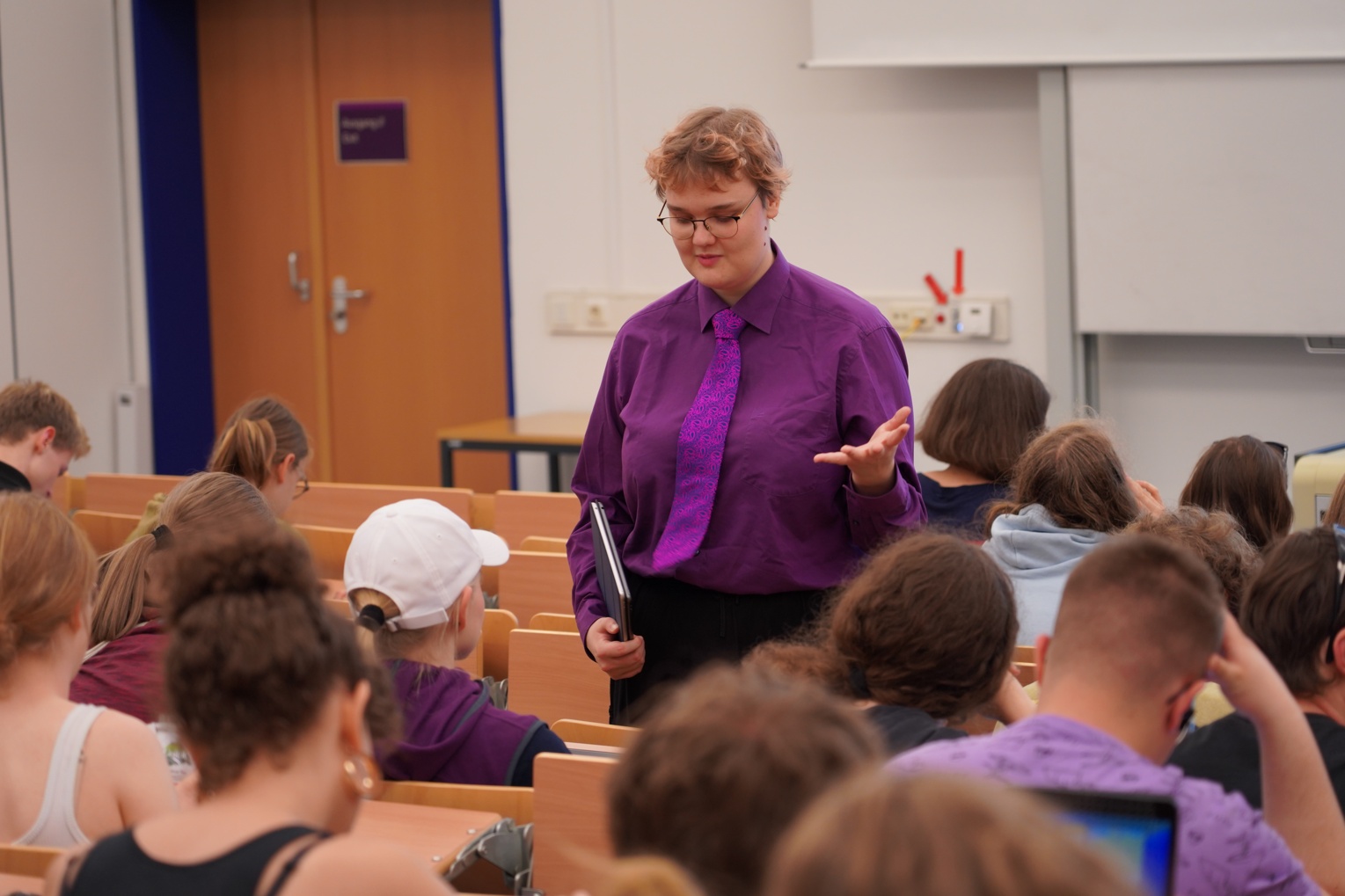
The final seminar of the 2024/2025 year took place in Kiel. Our FJN volunteer, Luise, was part of the team that organized the seminar, so she of course had the idea of inviting the group to the IPN and sharing with them her impressions and learnings from a year spent at a Leibniz institute. Luise’s main project during her year with us was KiKo, whose purpose is to create materials to support the learning of early science skills in the context of UNESCO’s 17 Sustainable Development Goals and provide them to daycare centers and elementary schools, alongside training teachers and kindergarten educators to use them. Luise also had the opportunity to experience other biology education projects and help out with activities in other departments at the IPN. All in all, she was able to gain a wide variety of foundational experience in how scientific research works.
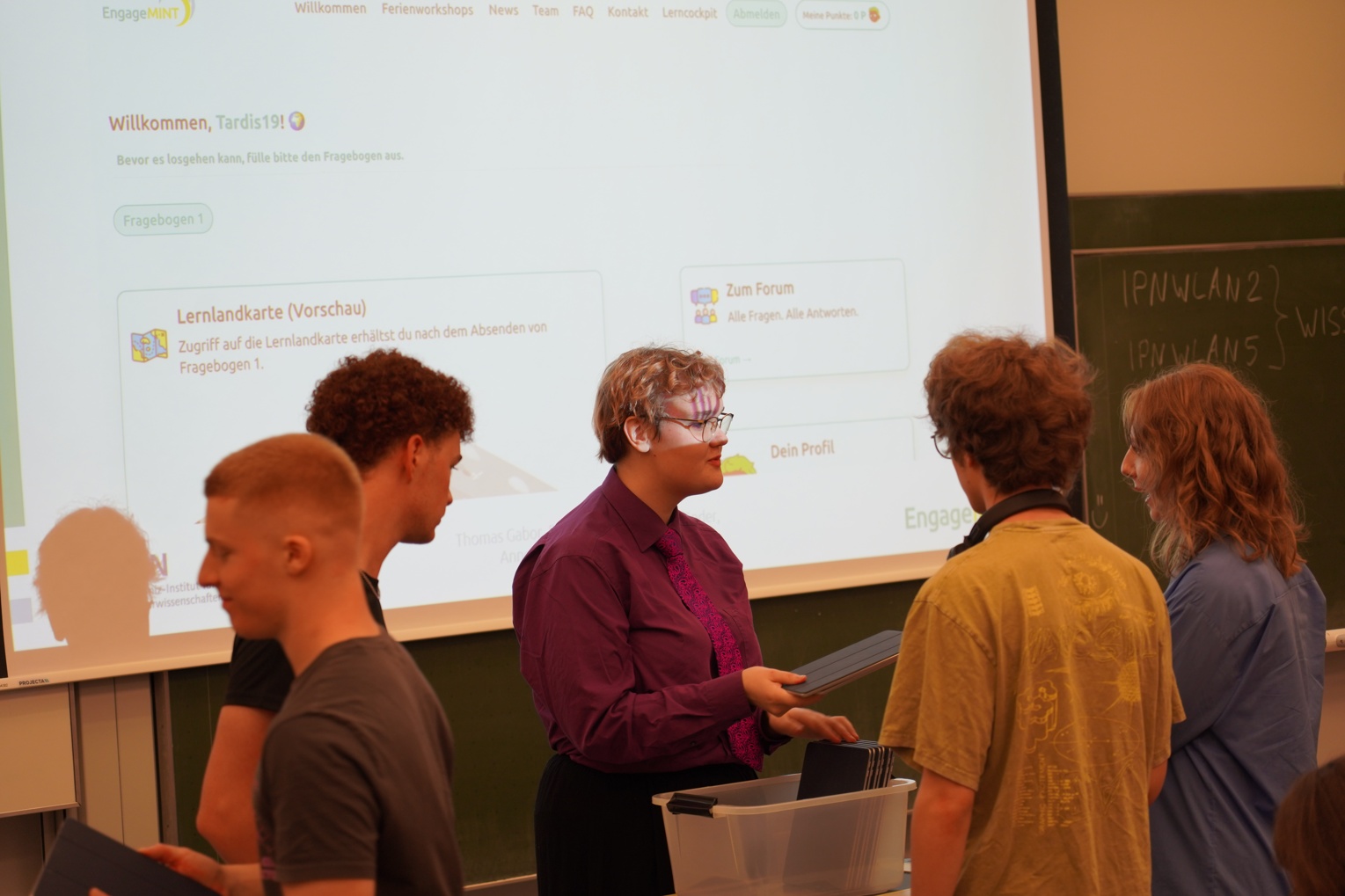
On July 31, during the seminar, Luise gave a talk outlining the work of the IPN and the EngageMINT project and provided an opportunity for the volunteers to explore EngageMINT’s online platform for studying air quality. EngageMINT’s aim – true to its name - is to maintain engagement with science among young people who are interested in STEM subjects; it provides them with an introduction to scientific research and shows them how to plan experiments.

We hope that the experience of the FJN and the insights it has provided will encourage some of the former volunteers into a life in STEM. If you know a young person who is making decisions about their career direction, why not help them by recommending they do an FJN? They might just become one of the scientists of the future.